


Historically
Jane Austen | Gisela Gayleard x Historically
Jane Austen | Gisela Gayleard x Historically
Couldn't load pickup availability
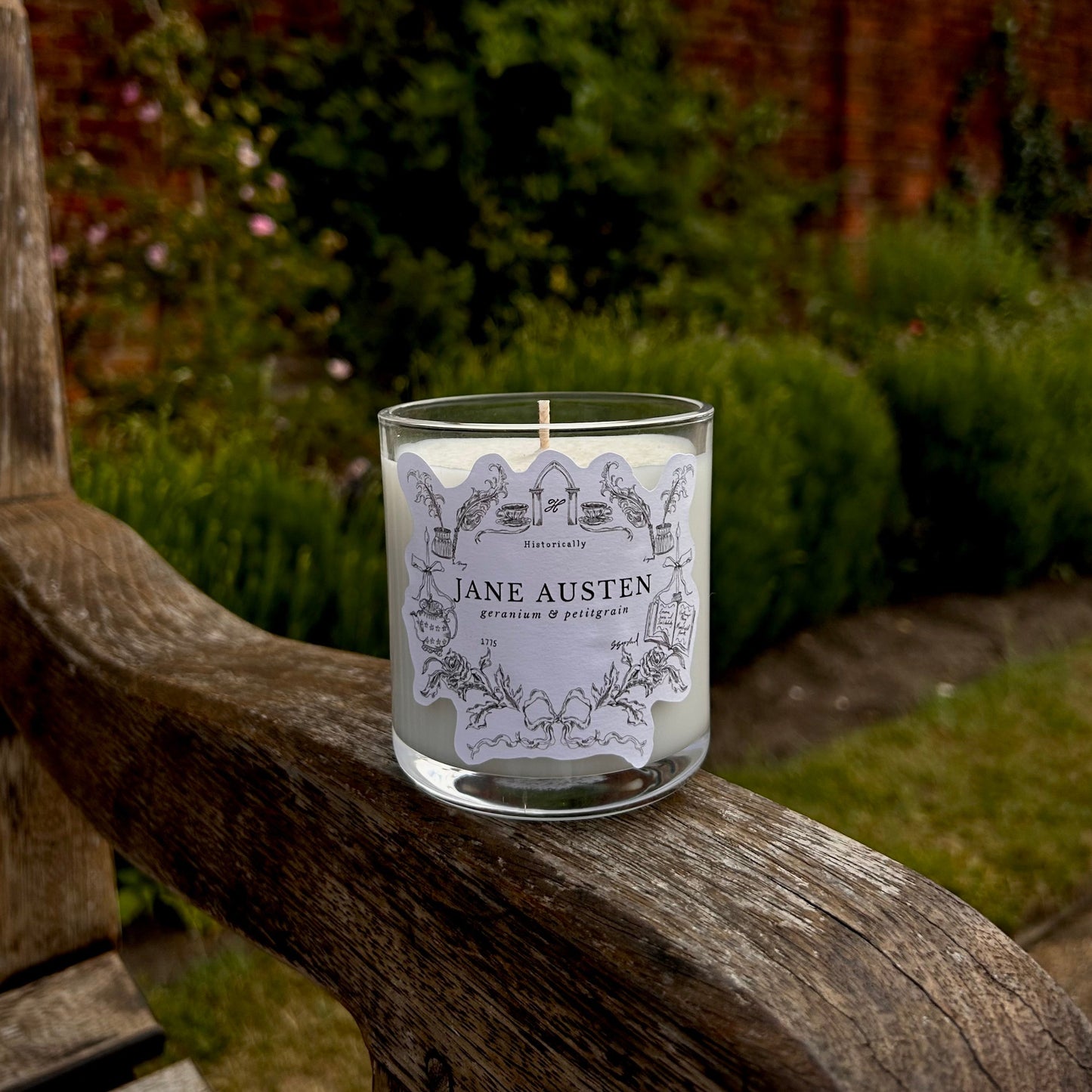
Where wit sharpens like sunlight on silver, and every word is perfectly placed. Let this refined bouquet transport you to the drawing rooms of Hampshire, where Miss Austen pens her truths beneath the quiet rustle of linen skirts. Elegant geranium blooms with graceful resolve, softened by the green, citrusy lift of petitgrain—fresh as a morning letter sealed with care. A scent for the discerning, the romantic, the quietly defiant. For those who know the power of a well-turned phrase and the thrill of a glance across the ballroom.
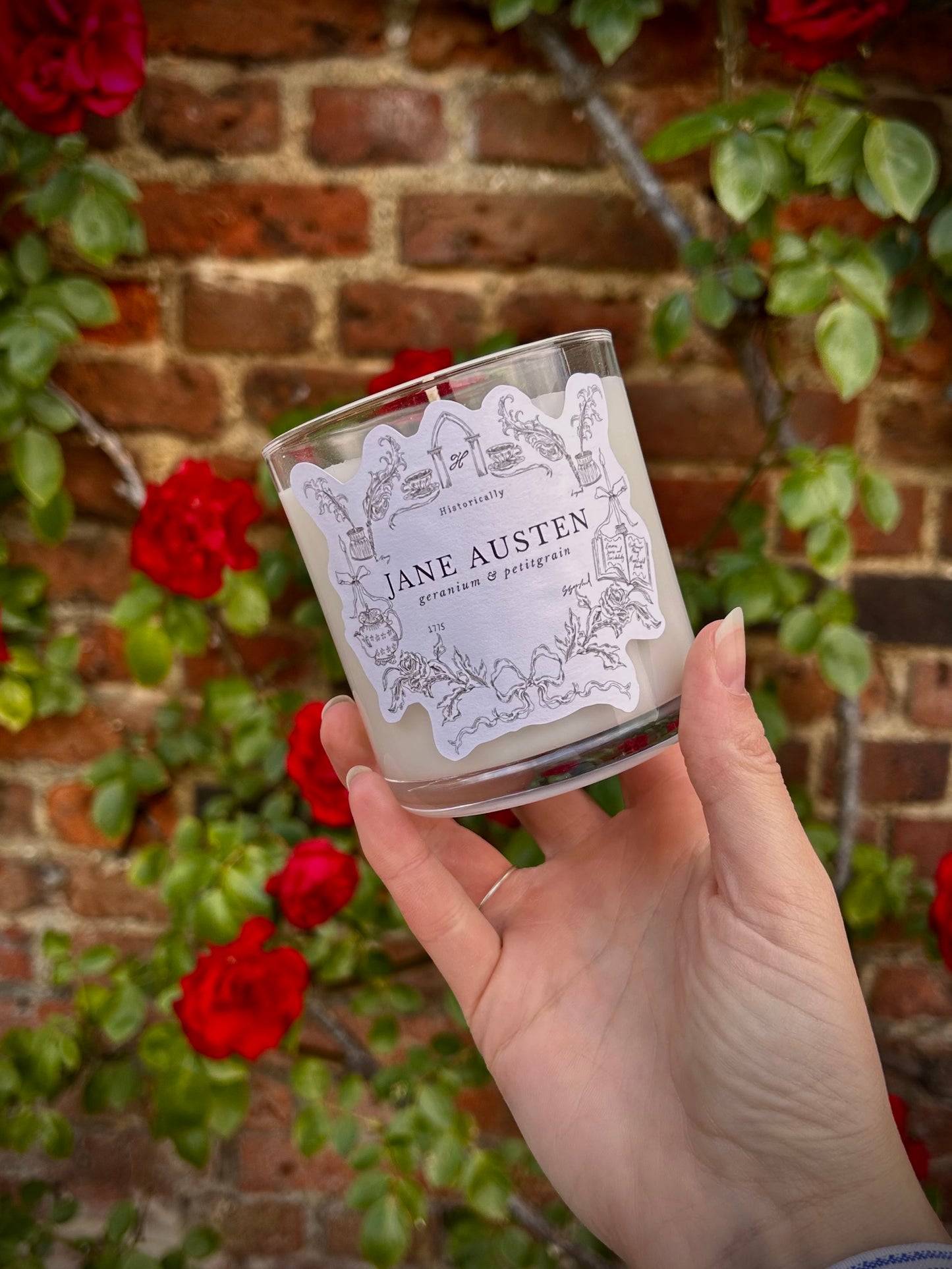
Featuring beautiful hand drawn ink work design by Gisela Gayleard. Gisela creates bespoke ink prints named her ‘inky narratives’ by creating her own fantasy worlds hand drawn in ink by pulling inspiration from history, English folklore, nature and character design. @gisela_illustrations and https://giselagayleard.com
170g/400g
Up to 40/100 hours of burn time
Recyclable glass vessel
100% Sustainable and natural soy wax
Essential Oils
Vegan and free from animal cruelty
Made in the UK
Share
Scent Inspiration
Scent Inspiration
This gloriously earthy and floral scent is inspired by the gardens of Jane Austen's real life and fictional worlds, from the Rectory garden at Stevenage where she grew up, Chawton Cottage and even the lushious grounds of Pemberley. For this scent we invisaged Jane sat amongst fragrant blooms penning her next novel, rich earth, delicate geranium and the sharp and woody scent of paper and ink blend to draw you into Jane's Regency England.
History behind the Woman
History behind the Woman
Writing during the late eighteenth and early nineteenth centuries, Austen produced novels that explored the delicate social world of the English gentry with remarkable insight. Though her settings often appear quiet and domestic, her observations were anything but trivial. Through irony, sharp dialogue, and carefully drawn characters, Austen examined class, morality, marriage, and the expectations placed upon women in her era.
Jane Austen was born in 1775 in the village of Steventon in Hampshire. She was the daughter of the Reverend George Austen and his wife Cassandra Austen. The Austen household was lively and intellectually engaged, filled with books, conversation, and a strong appreciation for literature. Jane grew up among six brothers and her beloved sister Cassandra, who remained her closest confidante throughout her life.
Education for girls in the late eighteenth century was often limited, but the Austen family valued reading and learning. Jane had access to her father’s extensive library and was encouraged to explore a wide range of literature. From an early age she began writing stories, plays, and sketches to entertain her family. These youthful works, sometimes referred to as her juvenilia, already revealed the wit and narrative skill that would later define her novels.
Life in the countryside shaped much of Austen’s literary imagination. The rhythms of village society, the visits between neighbours, and the subtle social hierarchies of rural England all found their way into her writing. Rather than depicting grand historical events or dramatic adventures, Austen focused on the everyday interactions of ordinary people.
Yet within these seemingly modest settings she explored profound themes. Her novels examine the consequences of pride, prejudice, vanity, and misunderstanding. They also consider the limited opportunities available to women whose financial security often depended upon advantageous marriage.
Austen’s first major novel to be published was Sense and Sensibility in 1811. Released anonymously, as was common for female authors of the period, the book was credited simply to “A Lady.” The novel introduced readers to the Dashwood sisters and their contrasting temperaments, exploring the balance between emotion and rational judgment.
The book was well received, encouraging Austen to continue publishing. Two years later she released what would become her most famous work, Pride and Prejudice. The story of Elizabeth Bennet and the reserved yet honourable Mr Darcy remains one of the most beloved romances in English literature.
Yet Pride and Prejudice is far more than a romantic narrative. Through Elizabeth’s sharp perceptions and independent spirit, Austen critiques the rigid social conventions that govern relationships within the gentry. The novel explores the dangers of first impressions and the importance of personal growth and moral reflection.
Austen followed this success with Mansfield Park in 1814 and Emma in 1815. Each novel presented a distinct heroine and social environment while continuing to examine the complexities of character and community.
Emma Woodhouse, the central figure of Emma, stands as one of Austen’s most intriguing creations. Intelligent, wealthy, and confident in her judgments, Emma attempts to guide the romantic lives of those around her. Yet her efforts often lead to misunderstanding and unintended consequences. Through Emma’s gradual self awareness, Austen explores the value of humility and empathy.
Although Austen’s novels focus on drawing rooms and country estates, they reflect the broader realities of the period in subtle ways. The fortunes of families often depended upon inheritance laws, military service, or colonial trade. These elements appear quietly within her narratives, reminding readers that even the tranquil villages she described were connected to wider historical forces.
Despite her growing literary reputation, Austen remained a private individual. She continued to live within a close family circle, moving between Hampshire, Bath, and other locations as circumstances changed. Much of her writing took place in modest domestic settings rather than grand literary salons.
In her later years Austen began work on another novel, Persuasion. The story follows Anne Elliot, a thoughtful woman who must confront the consequences of a past decision influenced by social pressure. The novel is often regarded as Austen’s most mature work, reflecting themes of regret, resilience, and second chances.
Sadly Austen’s life was cut short before she could fully enjoy the recognition her novels would later receive. She died in 1817 at the age of forty one and was buried in Winchester Cathedral. At the time of her death her books had earned a modest readership but had not yet achieved the enduring fame they would later command.
Scent Notes
Scent Notes
Geranium, petitgrain and ylang ylang
Safety Information
Safety Information
Contains Geraniol, Geranyl acetate, Neryl acetate, beta-Caryophyllene, beta-Pinene,
l-Citronellol, l-Limonene.
May produce an allergic reaction.
Frequently Asked Questions
Candle Care
I. Keep candles away from curtains, fabrics, furniture, and draughts.
II. Avoid placing candles under shelves; maintain a 3-foot (1-meter) clearance above.
III. Prevent contact with clothes and hair; place candles out of reach.
IV. Keep children and pets at a distance from candles.
V. Maintain at least 4 inches (10cm) between burning candles.
VI. Extinguish before moving; avoid objects falling into hot wax.
VII. Never leave burning candles unattended.
VIII. Safely extinguish with a snuffer or spoon, not by blowing.
IX. Double-check to ensure candles are completely out.
Delivery & Returns
Dispatch times
Our candles are made to order and most will take between 3-5 business days to dispatch but this can extend up to 7 business days during busy periods.
However, if you are wanting your order sooner or for a specific date please get in touch and we can sort something out for you!
Delivery Times
We currently offer standard delivery with Royal Mail Tracked 48 which should arrive between 2-3 days after dispatch and express delivery with Royal Mail Tracked 24 which should arrive between 1-2 days after dispatch.
Shipping outside the UK
We are unable to ship to the EU and USA at this time.
Please do get in contact with us if you would like an order delivered outside of the UK and we will let you know if this is possible and what shipping charges will be. If it is possible we will calculate the shipping costs for you and complete your order via invoice.
Please note that customers are responsible for paying any import VAT, taxes and fees.
What is your return policy?
Please note earrings cannot be returned and refunded for hygiene reasons.
We are happy to accept returns if you are unhappy with your purchase.
Contact us within 14 days of delivery
Dispatch items back within 30 days of delivery
Request a cancellation within 24 hours of purchase (this is only possible if you haven't recieved a dispatch email)
Buyers are responsible for return postage costs. If the item is not returned in its original condition, the buyer is responsible for any loss in value.
Item damaged in transit
Sometimes accidents happen.
If you receive a parcel that has been damaged in the post please send a picture to us showing the damage within 48 hours of your parcel being delivered and we can discuss options with you.
- 5 stars: 1 (100%)
- 4 stars: 0 (0%)
- 3 stars: 0 (0%)
- 2 stars: 0 (0%)
- 1 star: 0 (0%)
What a beautiful scent and gorgeous design! I bought this at a market in London and I fell in love instantly. Perfectly earthy, floral and fresh, my home smells like an english garden after summer rain. Gisela's illustrations are the perfect addition to the label. I am now a fan of two more women owned small businesses! Thank you!