

The Tudor period is often remembered through the powerful figures who ruled the throne, particularly Elizabeth I and Mary I. Yet the age was shaped not only by queens but by women whose influence extended through literature, politics, diplomacy, and even the seas themselves. Tudor society remained deeply structured by expectations of obedience and domesticity, yet some women quietly expanded the boundaries placed upon them, while others shattered them entirely.
In the second entry of this Women’s History Month series, we look beyond royal courts and into the remarkable lives of two women who forged their own paths in very different ways. One was a scholar and literary patron who helped cultivate one of the most vibrant intellectual circles of the Elizabethan age. The other was a formidable leader of the Irish coast whose command of ships and alliances earned her the title of pirate queen.
Together, the stories of Mary Sidney and Grace O'Malley reveal a Tudor world that was far more complex for women than traditional narratives might suggest.
Mary Sidney: Scholar, Patron, and Architect of a Literary Circle

Born in 1561 into the influential Sidney family, Mary Sidney grew up in an environment that prized education, culture, and intellectual curiosity. Her father, Henry Sidney, served as Lord Deputy of Ireland, while her brother, Philip Sidney, would become one of the most celebrated poets and courtiers of the Elizabethan age. Within this environment Mary received an education far beyond what was typical for women of the time.
Fluent in several languages and deeply engaged in classical literature, Mary Sidney emerged as one of the most learned women of the Tudor period. Her marriage to Henry Herbert, 2nd Earl of Pembroke placed her at Wilton House, a country estate that would soon become one of the most important literary centres in England. There she cultivated a community of writers, poets, and thinkers who gathered under her patronage.
This circle, often called the Wilton Circle by historians, included figures who helped shape English Renaissance literature. At a time when women were rarely acknowledged as intellectual leaders, Mary Sidney quietly positioned herself at the heart of a thriving cultural movement.
Her influence extended well beyond patronage. After the death of her brother Philip in 1586, Mary undertook the editing and publication of his works, ensuring that his writings would reach a wider audience. Without her careful stewardship, some of the most significant literary works of the age might have been lost to history.
Yet she was not simply a curator of others’ achievements. Mary Sidney was herself a writer of considerable talent. She translated religious and classical texts into English, including a celebrated translation of the Psalms which she worked on collaboratively with her brother and later completed. Her literary style reflected the intellectual confidence and humanist education that characterised the Elizabethan Renaissance.
What makes Mary Sidney particularly remarkable is the subtlety of her influence. She did not seek political authority or public acclaim, yet her contributions helped shape the cultural landscape of Tudor England. Her translations expanded the accessibility of important texts. Her patronage nurtured the careers of writers whose works would define an era. And her intellectual leadership demonstrated that women could occupy central roles within scholarly life.
Mary Sidney also contributed to the development of English drama. Some scholars believe that her literary environment at Wilton House helped inspire playwrights and poets of the period. The atmosphere she cultivated, where ideas, language, and creativity could flourish, mirrored the broader artistic explosion occurring across England during the reign of Elizabeth I.
In a society that often restricted women’s voices, Mary Sidney found ways to amplify them. Through scholarship, patronage, and literary collaboration, she established herself as one of the most important female intellectuals of the Tudor age.
Her legacy endures not only through the works she wrote and preserved but through the example she set. Mary Sidney demonstrated that influence does not always require a crown or battlefield command. Sometimes it is found in the quiet power of ideas, language, and the cultivation of creativity.
Grace O'Malley: The Pirate Queen of Ireland
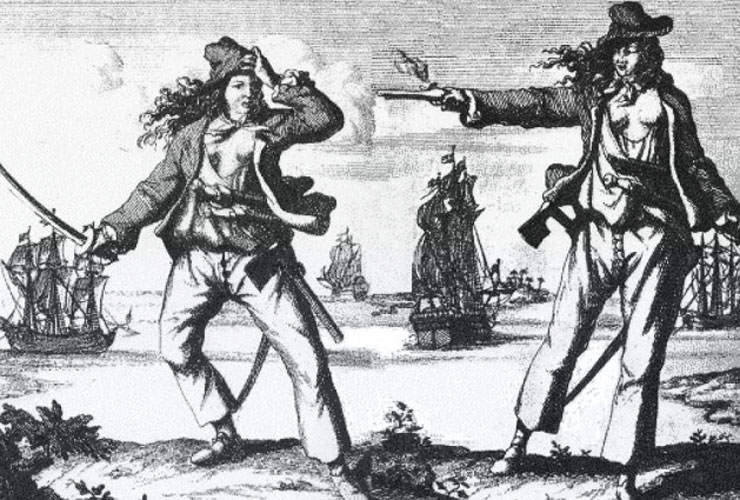
While Mary Sidney shaped Tudor culture from within the halls of English nobility, another remarkable woman was forging her own authority along the rugged coastline of western Ireland. Grace O'Malley, known in Irish as Gráinne Mhaol and often called Granuaile, became one of the most formidable maritime leaders of the sixteenth century.
Born around 1530 into the powerful O'Malley clan of County Mayo, Grace grew up in a family that controlled important sea routes along the Atlantic coast. The O'Malleys were known for their seafaring traditions, trading networks, and naval strength. From an early age Grace was immersed in this maritime world.
Legend suggests that as a young girl she cut off her hair so she could accompany her father on trading voyages, a story that gave rise to the nickname Mhaol, meaning bald or cropped haired. Whether fully accurate or embellished over time, the tale captures the independent spirit that defined her life.
By adulthood Grace O'Malley commanded fleets of ships that travelled between Ireland, Scotland, and beyond. Her vessels were used for trade, protection of clan interests, and sometimes piracy. In the turbulent political landscape of sixteenth century Ireland, such activities were not unusual. Control of the seas meant power, wealth, and influence.
Grace married twice, first to Dónal an Chogaidh O'Flaherty and later to Richard Burke, 18th Mac William Íochtar, alliances that strengthened her political position among powerful Gaelic families. Yet she remained far more than a figure within dynastic marriages. Grace commanded ships, negotiated alliances, and defended her territories with remarkable authority.
Her reputation as a formidable leader spread across Ireland and eventually reached the English administration. The expanding influence of the Tudor state in Ireland brought English officials into conflict with Gaelic lords and clan leaders, including Grace O'Malley.
One of the most remarkable moments of her life occurred in 1593 when she travelled to England to petition Queen Elizabeth I directly. The meeting between these two extraordinary women has become legendary. According to accounts from the period, the conversation was conducted in Latin, a language both women understood.
Grace sought the release of her son and the restoration of lands and rights that had been restricted by English authorities. Elizabeth, recognising the strategic value of diplomacy with such a powerful local leader, granted several of her requests.
The encounter between Grace O'Malley and Elizabeth I is striking for many reasons. It represents a rare moment where two female leaders from vastly different political and cultural worlds negotiated face to face. Each woman commanded authority in societies largely dominated by men.
Grace O'Malley’s life challenges many assumptions about women in the Tudor world. She was not confined to domestic spaces or courtly roles. Instead she navigated the volatile waters of Irish politics and maritime power with skill and determination.
Stories of her exploits became part of Irish folklore and historical memory. Ballads, legends, and local traditions preserved the image of Granuaile as a fearless seafarer who defied convention and authority alike.
Today she stands as one of the most fascinating figures of sixteenth century Ireland. Grace O'Malley represents a different dimension of Tudor womanhood, one defined not by literary salons or noble estates but by ships, strategy, and the relentless Atlantic.
International Women’s Day
This post is published on International Women's Day, a global celebration of women’s achievements and a reminder of the continuing pursuit of equality.
International Women’s Day began in the early twentieth century during a period of growing activism for women’s rights. The first National Women’s Day was observed in the United States in 1909, organised by the Socialist Party. The idea quickly spread across Europe where activists campaigned for voting rights, better working conditions, and political representation.
In 1910 the German activist Clara Zetkin proposed the creation of an international day dedicated to women’s rights at the International Socialist Women’s Conference in Copenhagen. The first widely recognised International Women’s Day took place in 1911 across several European countries.
Over time the day evolved into a worldwide celebration of women’s contributions across every field of society. In 1975 the United Nations officially recognised International Women’s Day, further cementing its global significance.
Today it is both a celebration and a moment of reflection. It honours the women of the past who expanded the boundaries of possibility, and it recognises those who continue that work today.
To celebrate International Women’s Day, all candles are 20% off for the entire day! A small tribute to the remarkable women whose stories continue to illuminate history.
Women’s History Month Series continues next Sunday.